Hey there! I’m a supplier in the magnesium die casting business. Over the years, I’ve seen my fair share of problems crop up during the die casting process. In this blog, I’m gonna share some tips on how to troubleshoot those pesky issues that can disrupt your production and eat into your profits. Magnesium Die Casting
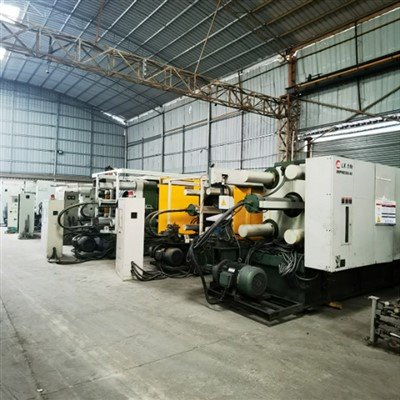
Let’s start with the basics. Magnesium die casting is an awesome process that allows us to create complex parts with high precision and excellent mechanical properties. But like any manufacturing process, it’s not without its challenges. The most common problems we encounter include porosity, cold shuts, misruns, and cracks.
First up, porosity. This is when there are tiny holes or voids in the cast part. Porosity can be a real pain because it weakens the part and can lead to failure under stress. There are a few reasons why porosity might occur. One is improper gating and venting. If the molten magnesium can’t flow smoothly into the mold or if the air can’t escape properly, it can get trapped, creating pores.
To fix this, you need to take a good look at your gating and venting system. Make sure the gates are the right size and shape to allow the metal to flow evenly. Also, check the venting channels to ensure they’re clear and big enough to let the air out. Sometimes, you might need to add more vents or adjust the position of the existing ones.
Another cause of porosity is gas entrapment. Magnesium is a reactive metal, and it can easily react with moisture in the air or mold materials. This reaction produces hydrogen gas, which can get trapped in the solidifying metal. To prevent this, keep your mold and the raw materials as dry as possible. You can use a pre – heating process to remove any moisture from the mold before pouring the magnesium.
Cold shuts are another common problem. These look like seams or lines on the surface of the cast part. They occur when the molten magnesium doesn’t fuse properly as it flows into the mold. Cold shuts can be caused by low pouring temperature. If the magnesium is too cold when it enters the mold, it will start to solidify before it can fully fill the cavity.
To fix this, you need to make sure you’re pouring the magnesium at the right temperature. Use a reliable temperature sensor to monitor the temperature of the molten metal. If the temperature is too low, heat up the furnace or adjust the pouring speed. Also, check the mold temperature. If the mold is too cold, it can cause the magnesium to cool down too quickly. You might need to use a mold heater to keep the mold at the optimal temperature.
Improper gate design can also lead to cold shuts. If the gates are too small or in the wrong position, the molten metal can’t flow evenly, resulting in cold shuts. So, just like with porosity, review and optimize your gate design.
Misruns are similar to cold shuts, but they’re more severe. A misrun occurs when the molten magnesium doesn’t completely fill the mold cavity. This can be due to a variety of reasons, such as low injection pressure, slow injection speed, or a complex mold design.
If you’re experiencing misruns, first check the injection pressure and speed. Make sure your die – casting machine is set to the correct parameters for the part you’re making. Sometimes, increasing the pressure or speed can help the magnesium flow better and fill the mold completely.
For complex mold designs, you might need to make some modifications. You could add overflow wells or adjust the shape of the cavity to make it easier for the metal to flow. It’s also a good idea to simulate the die – casting process using software to identify potential flow issues before you start production.
Now, let’s talk about cracks. Cracks in a magnesium die – cast part can be a major headache. There are two main types of cracks: hot cracks and cold cracks.
Hot cracks occur during the solidification process when the metal is still hot and brittle. They’re usually caused by excessive internal stresses due to uneven cooling. To prevent hot cracks, you need to ensure uniform cooling of the part. You can use insulating materials or cooling channels in the mold to control the cooling rate.
Cold cracks, on the other hand, form after the part has cooled down. They can be due to factors like improper heat treatment, residual stresses, or low ductility of the magnesium alloy. If you suspect cold cracks, check your heat treatment process. Make sure you’re following the correct procedures for the specific alloy you’re using. You might also need to use stress – relieving techniques to reduce the residual stresses in the part.
In addition to these common problems, there are other issues that can affect the quality of your magnesium die – cast parts. For example, surface finish problems like rough surfaces or scratches. Rough surfaces can be caused by a dirty mold or improper mold release agents. Make sure to clean your molds regularly and use high – quality release agents.
Scratches can occur during handling or ejection of the part from the mold. To prevent this, use proper handling equipment and make sure the mold ejection mechanism is working correctly.
Another thing to watch out for is dimensional inaccuracies. This can be due to mold wear, improper clamping force, or temperature variations. Check your molds regularly for signs of wear and replace them if necessary. Make sure the clamping force of your die – casting machine is set correctly to prevent the mold from opening during the casting process. And keep an eye on the temperature of the mold and the molten metal to ensure consistent dimensions.
So, there you have it! These are some of the most common problems in magnesium die casting and how to troubleshoot them. Remember, troubleshooting is all about finding the root cause of the problem and taking the right steps to fix it. It might take a bit of trial and error, but with patience and the right approach, you can produce high – quality magnesium die – cast parts.

If you’re in the market for magnesium die – cast products or if you’re facing some of these problems in your own production and need some expert advice, don’t hesitate to reach out. We’ve got the experience and the know – how to help you get the best results. Whether you need custom – designed parts or just some tips on improving your existing process, we’re here to assist. Let’s have a chat and see how we can work together to solve your magnesium die – casting challenges.
Zinc Die Casting References:
- "Magnesium Technology" – A collection of research papers on magnesium processing and applications.
- "Die Casting Handbook" – A comprehensive guide to die – casting processes and troubleshooting.
Shenzhen Shunhaoda Technology Co., Ltd.
With abundant experience, we are one of the most professional magnesium die casting manufacturers and suppliers in China. If you’re going to buy bulk high quality magnesium die casting made in China, welcome to get free sample from our factory. Also, custom service is available.
Address: 902, Building A3, Tianrui Industrial Park, No. 35 Fuyuan 1st Road, Zhancheng Community, Fuhai Street, Bao’an District, Shenzhen
E-mail: sales@shdindustry.com
WebSite: https://www.shd-industry.com/
