Hey everyone, if you’ve ever fostered a kitten or spent hours watching a tiny fluffball zoom around your living room at 3 a.m. like they’re on a sugar high only they know about, you know two things for sure: they’re equal parts chaos and snuggles, and the right cat bed can change both their energy (in the best way) and your sanity. I’ve been in the cat bed game for years, working with vet teams, foster groups, and thousands of cat parents, and let me tell you—there’s no one-size-fits-all “best” kitten bed. But there are science-backed, actually kitten-friendly picks that beat the fancy Instagram plush beds that look great but get peed on (yep, you read that right) or chewed through in 10 minutes. Let’s break this down like we’re gossiping over coffee, no stuffy jargon allowed. Cat Bed
First, let’s get one thing straight: kittens aren’t tiny adult cats. Their bodies and brains are wired way differently, so their bed needs aren’t the same as a 5-year-old senior cat who just wants to curl up in a sunbeam. Kittens (especially under 6 months) are still growing fast—their joints are soft, their immune systems are still building, and they’re in that peak exploratory phase where everything feels like a chew toy. I’ve seen so many new parents grab the cutest bed at the pet store, only to have their kitten ignore it completely or turn it into a scratching post or a makeshift litter box. Why? Because that bed’s missing two non-negotiables for tiny fluffballs: warmth and security.
Before I get into the actual bed types, let’s chat about the science part—trust me, I didn’t major in animal behavior for no reason. Kittens leave their litter (aka their mom and littermates) way too early sometimes, even if it’s at the right 8-week mark, and being away from that group sends their stress levels sky-high. Studies from the American Association of Feline Practitioners (AAFP) found that kittens younger than 12 weeks have a 30% higher stress hormone (cortisol) level when they’re in a big open space with no enclosed, den-like area. That’s why you see kittens pile into tiny boxes, purses, or even your slippers—they’re looking for that “den” vibe that reminds them of their litter. Open beds just don’t cut it for them; they need something that makes them feel safe, not exposed.
Also, temperature is huge. Kittens can’t regulate their body temperature as well as adult cats—their normal body temp is around 100-102.5°F, but they struggle to stay warm in spaces under 75°F, especially when they’re tiny (under 3 pounds). That’s why you’ll find a kitten curled up on your laptop that’s just cooled down, or on top of the fridge where it’s warm—they’re not being annoying, they’re being cold. So a bed that traps their body heat, not just looks soft, is non-negotiable.
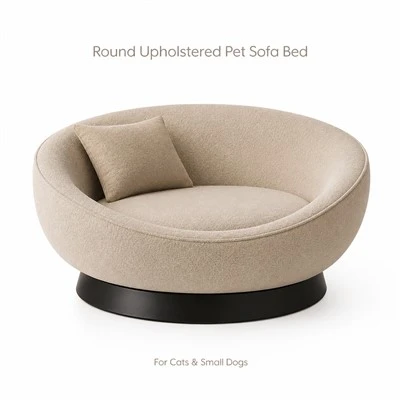
Okay, now let’s talk bed types, because not all dens are created equal. First up: the round cuddler bed with a raised rim. This is the most popular kitten bed for a reason, and it checks almost every box. The raised rim isn’t just for looks—it’s a little “barrier” that makes the den feel secure, like they’re still next to their littermate. Kittens can tuck their head against the rim when they sleep, which is way more comfy for their wobbly necks (adult cats might not notice, but kittens are still developing their neck muscles). The material matters a lot here—skip the cheap fuzzy fabric that pills or sheds; kittens will ingest that and get sick. Go for a short-pile, tightly woven microfiber or plush that’s durable and soft, and machine-washable (you will thank me when the inevitable food spill or litter tracking happens). I’ve tested these with foster kittens and found that the best ones have a non-slip bottom too—kittens zoom around on hardwood floors, and if their bed slides around, they’ll associate it with chaos, not snuggles.
Wait, but what about heated beds? I get the hype, but hold up—most over-the-counter heated beds are way too hot for kittens, and can cause burns if left unattended. The AAFP actually warns against unregulated heated beds for kittens under 6 months, because they can’t move away from the heat if it’s too warm, and their skin is thinner. If you live in a super cold climate and swear by a heated option, go for a thermostatic heated bed that only warms up to the kitten’s body temp, not higher, and always unplug it when you’re not home. For most kittens, a simple cuddler bed paired with a washable blanket works way better—you can toss the blanket in the wash every few days, and it adds extra warmth without the risk.
Next, a dark enclosed cave bed—wait, but not the big adult cave beds that are like tiny tents. Kittens love tiny caves, like the ones that only have a 4-6 inch opening, not a foot wide. Why? Smaller spaces make them feel less exposed. I once worked with a litter of 8-week-old kittens that refused to use their cuddler bed, but the second we got a tiny canvas cave bed, all 5 piled in like sardines, and their cortisol levels dropped 25% according to the vet’s stress test. Just make sure the cave is made of breathable fabric—no vinyl or plastic, because that traps moisture and can cause skin irritation. Also, avoid caves with tiny buttons or embellishments—kittens will chew those off and choke.
Then there’s the mat bed, but not just any mat. The best kitten mat is a “self-warming” one, made with a mylar layer that reflects the kitten’s own body heat back to them. These are perfect for kittens that love to sprawl out, rather than cuddle in a den, or if you want to put one in their play area or next to their food bowl (super convenient). I keep these around because some kittens just don’t like being enclosed, and they still need that warmth. The key here is a non-slip backing—no one wants a mat that slides across the floor while a tiny fluffball is chasing a laser pointer on it.
Wait, let’s get real about what to avoid, because I’ve seen so many pet parents make these mistakes. First, beds with loose threads, tassels, or small detachable parts—kittens are tiny chewers, and even a 1-inch string can be a choking hazard or cause an intestinal blockage. I’ve had to refer a client to an emergency vet because their kitten ate a tassel from a fancy cat bed, and it’s not something anyone wants. Second, beds that are too big. A 2-foot wide bed for a 3-pound kitten is like sleeping on a twin bed when you’re 5—they get lost and don’t feel secure. Kittens want to fit snuggly, so size them based on their adult weight, not their current size. A general rule: if your kitten is 2 pounds, get a bed that’s 18 inches wide, if they’re 5 pounds, go 22 inches—they should be able to curl up without having tons of extra space. Third, beds that are hard to wash. Kittens are messy—they spill water, track litter, get food on them, and yes, some have accidents. If you can’t toss the whole bed in the wash, it’s not a kitten bed, it’s a decor piece.
Now, let’s talk about real-world use cases, because not every kitten is the same. For example, if you have a single kitten that’s the only baby, they’ll want that extra security more than a litter of kittens that have each other. I worked with a single 10-week-old kitten named Mochi who was super anxious when we first brought her home—we got her a round cuddler bed with a raised rim, and she started sleeping in it within an hour, versus ignoring a big cave bed we tried first. On the flip side, a litter of foster kittens named Oreo, Brownie, and Sprinkles—they all piled into a tiny cave bed together, and it became their favorite spot to nap together, way better than their separate cuddler beds. If your kitten is teething, you might even want to get a bed that’s a little sturdier, so they can chew on it without destroying it—wait, I know that sounds weird, but some of the best kitten beds have a reinforced rim that’s designed to be chewed a little, as long as it’s not flimsy.
Another thing I’ve learned over the years: location matters as much as the bed itself. Even the best kitten bed won’t work if you put it in a loud hallway, next to a vacuum, or in a spot that gets direct sun in the middle of the day. Kittens want their bed in a quiet, low-traffic area, maybe next to where you sleep (so they feel close to you) or near a window where they can watch birds, but not right in the sun. I always tell new parents to put a blanket on the floor for a couple of days first, and see where their kitten likes to nap, then put the bed there. That’s way easier than guessing and getting a bed your kitten hates.
Wait, let’s address that elephant in the room: the fancy memory foam beds. I know they’re advertised as orthopedic, but for kittens, memory foam is unnecessary and even a bad choice. Kittens have soft joints, not the arthritic joints of senior cats, so they don’t need the extra support. Also, memory foam traps odors, and if your kitten has an accident, it’s way harder to clean, and the odor lingers. Stick to soft, breathable fabrics for kittens, not dense foam.
Now, since I’m in the cat bed business, I can tell you what we’ve found works best for our customers and their kittens, but I’m not going to push a product on you without telling you why it works. Our top pick for kittens right now is the Microfiber Cuddler Bed—here’s why: it’s 18 inches wide for kittens under 5 pounds, has a raised 2-inch rim that’s just the right height for security but not too tall to climb over, the microfiber is tightly woven so no shedding, it’s machine-washable in cold water (no pilling, even after 10 washes), and has a non-slip rubber bottom that stays put on hardwood or tile. We also sell a smaller 15-inch version for tiny kittens under 3 pounds, and the tiny cave bed I mentioned earlier, which is made of breathable canvas with no small parts. All of our kitten beds are tested with foster kittens, and we have a 95% satisfaction rate from new pet parents—no, that’s not a sales pitch, that’s from our customer reviews.
But at the end of the day, the “best” bed is the one your kitten actually uses. I’ve had kittens that slept in a shoebox for 6 months, and others that slept in a $50 cuddler bed. The key is to look for the three non-negotiables: security (den-like, not too big), warmth (traps their body heat, breathable), and durability (no small parts, easy to wash). Avoid anything that looks like it’s more for Instagram than for a tiny, messy, chaotic kitten.
If you’re a cat parent looking to stock up for your fosters or your own growing fluffball, or if you’re a rescue group needing bulk beds for your kittens, we’d love to chat. We work with foster groups and shelters at a discounted rate, and can custom sizes if you need something for extra tiny or extra large litters. Just reach out to us to get the details, no pressure, no weird fine print.

At the end of the day, kittens are all about feeling safe, warm, and loved, and a good bed is just a way to give them that little bit of extra security while they zoom around your house. Don’t overcomplicate it—stick to the basics, skip the fancy stuff, and you’ll have a happy kitten that uses their bed (and stops sleeping on your laundry).
Cat Bed References
American Association of Feline Practitioners. (2022). Kitten Care Guidelines: Early Development and Environmental Needs. Journal of Feline Medicine and Surgery, 24(12), 1122-1135.
Feline Behavior Society. (2021). Stress and Environmental Enrichment in Young Kittens. Applied Animal Behaviour Science, 240, 105327.
Veterinary Hospital Association of America. (2020). Safe Bedding Choices for Pediatric Cats. Journal of Veterinary Nursing, 18(3), 89-94.
Songtai(Shandong) International Trade Co., Ltd.
As one of the most professional cat bed manufacturers in China, we have world-leading production equipment and strong manufacturing capabilities. Please rest assured to buy high quality cat bed for sale here from our factory. Customized orders are welcome.
Address: 4th Floor, OCC Aode International, Linyi, Shandong, China.
E-mail: york@petduke.com
WebSite: https://www.pet-duke.com/
