If you’ve ever stood in a warehouse at 2 a.m. during peak storage season, or worked in a manufacturing plant where temperature and air circulation directly tie to production output, you know axial fans are the unsung workhorses of commercial ventilation. For years, many of my customers have asked me: instead of scaling up to a single larger fan, why not pair two or more axial fans in parallel to move more air? The question makes sense—at first glance, doubling the number of fans feels like a straightforward way to double airflow. But after 12 years as an axial fan supplier, I’ve seen first-hand how parallel operation can swing performance from a win to a costly misstep if you don’t understand the science behind it. Today, I’m breaking down how parallel operation impacts axial fan performance, what to watch for, and how to make it work for your space. Axial Fan
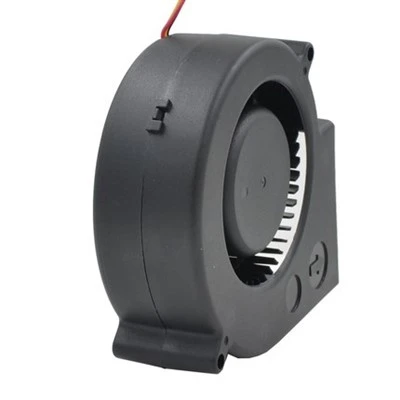
First, let’s get clear on what parallel operation means for axial fans, because it’s not the same as series operation. When you run fans in series, air passes through one fan and then the next, stacking their pressure output to overcome higher resistance in ductwork or long ventilation runs. Parallel operation, by contrast, means two or more fans sit side-by-side, drawing air from the same inlet plenum and exhausting into the same outlet system. The core promise of parallel setup is that total airflow adds up—at least in theory. A single axial fan might push 10,000 cubic feet per minute (CFM) at a given static pressure; put two identical models in parallel, and you’d expect 20,000 CFM at that same pressure. That’s the ideal scenario, but real-world results rarely match it, and that’s where the performance tradeoffs start.
Let’s start with the factors that drive the performance of parallel axial fans, starting with their operating point, also known as their duty point. Every axial fan has a performance curve: a graph that maps airflow (CFM) against static pressure (the resistance the fan has to work against, like duct friction or obstructions). The curve’s shape depends on the fan’s design—blade pitch, hub ratio, number of blades, and motor size all play a role. When fans run in parallel, their combined curve isn’t just a simple addition of individual curves. Instead, you take the same static pressure value from each fan’s curve and add the CFM numbers. So, if Fan A and Fan B both hit 10,000 CFM at 0.5 inches of static pressure, their combined parallel curve will hit 20,000 CFM at that same 0.5 inches. That seems straightforward, right?
But here’s the first big catch: parallel fans don’t always operate at the same point. In perfectly matched, identical fans with balanced ducting, their curves align, and total airflow is close to the theoretical sum. But if even one fan is slightly mismatched—say, a new fan with a tiny blade pitch difference paired with a 5-year-old unit with worn blades, or if duct design causes uneven pressure at each fan’s inlet—one fan will draw more air than the other. The mismatched fan will pull its curve left (lower airflow) to match the other’s operating point, so total airflow ends up being less than the sum. In my experience, this is the most common mistake I see customers make when installing parallel axial fans: assuming all fans are identical and ducting is perfectly balanced, even when that’s rarely the case.
Next, static pressure is a make-or-break factor for parallel performance. Let’s talk about two scenarios: low static pressure (like a wide-open warehouse with no long ductwork) and high static pressure (like a system with tight duct bends, filters, or cooling coils that create a lot of resistance). At low static pressure, the parallel setup’s combined curve is steep, and the system curve (which maps static pressure against required airflow for your space) is flat. In this case, adding two fans in parallel almost always delivers close to the expected airflow. For example, a 30,000 sq. ft. cold storage space that needs 18,000 CFM total will get almost exactly that from two identical 9,000 CFM axial fans running in parallel, no issues.
But at high static pressure, the story changes. Let’s say you have a 12,000 CFM requirement, but your ductwork and filters create a static pressure of 1.5 inches. A single axial fan might deliver 12,000 CFM at 1.5 inches, which is perfect on its own. If you pair two identical fans in parallel, their combined curve at 1.5 inches might only add up to 11,000 CFM—less than a single fan. That’s because axial fan performance curves drop off sharply at higher static pressures, and the combined curve for parallel fans drops even faster in that range. Why? Axial fans work by imparting velocity to air, and when the system resists that airflow, each fan has to push harder. In parallel, the total pressure has to match across both fans, so the fan that would normally deliver more air at lower pressure is forced to slow down to match the other’s pressure, cutting total output. I’ve had a customer call me last year panicking because he installed two parallel axial fans to replace a single unit for his 5,000 sq. ft. manufacturing space with high static filtration, and his airflow dropped 15% instead of rising. We had to swap them for a single larger fan that handled the high pressure better, and he saved $2,000 in energy costs in the first quarter after.
Another critical point is energy efficiency. A lot of people assume doubling fans means doubling energy use, but that’s not always true—and sometimes it’s the opposite. At low static pressure, parallel fans run at a lower efficiency point than a single large fan would for the same total airflow. Axial fans are most efficient at their design point, and small fans often have a narrower efficiency range than larger units. For a space that runs 24/7, that mismatch adds up. Let’s do a quick example: a single 18,000 CFM axial fan has an efficiency of 82% at 0.5 inches static pressure, drawing 3.2 kW. Two 9,000 CFM fans in parallel at the same pressure each have an efficiency of 76%, drawing 1.9 kW each, for a total of 3.8 kW. That’s 19% more energy use for the same airflow, not to mention the extra maintenance of two motors and fans. On the flip side, if you’re running in a low-pressure system with variable airflow needs—like a loading dock that only needs full airflow during truck loading, and half airflow overnight—parallel fans let you run just one fan during low-demand hours, cutting energy use by half. That’s a huge win for facilities with fluctuating ventilation needs, which is something I always highlight for warehouse and loading dock customers.
Then there’s the risk of unstable operation, which is something most first-time parallel users don’t consider. Axial fans can experience a phenomenon called surging when they operate too far left on their curve (low airflow, high pressure). In parallel setup, if one fan surges, it can create pressure fluctuations that force the other fan to surge too. Surging is bad: it causes loud noise, vibration, and can damage fan blades and motors over time. It’s more common in parallel axial fans than series because the shared ductwork means pressure changes in one fan affect the other. I once had a food processing plant customer whose parallel axial fans were surging so badly they’d crack fan mounts every 6 months. Turns out, their ducting had a narrow section right before the inlet plenum, creating uneven pressure that pushed each fan into their surge point. We added a balanced inlet plenum and dampers to equalize airflow, and the surging stopped. That’s a small fix, but it’s a reminder that parallel setup isn’t just about plugging fans in—it’s about balancing the system.
Now, let’s talk about the times parallel operation is actually the right choice, because it’s not all bad. The best use cases for parallel axial fans are when you need high total airflow, low static pressure, and flexible operation. Loading docks, warehouses with high ceilings, greenhouse ventilation, and indoor sports facilities all fit this mold. For example, a 10,000 sq. ft. greenhouse needs 24,000 CFM total to keep plants cool in summer. Two 12,000 CFM axial fans in parallel will deliver almost exactly that, and you can even run one fan at half speed overnight to reduce cooling costs while still maintaining air circulation. Another good use case: redundant ventilation. If your facility can’t afford downtime for ventilation, parallel fans mean if one fails, the other can keep running at partial capacity instead of shutting down the entire system. That’s a lifesaver for food storage facilities, where stagnant air can lead to mold or spoilage.
So, what should you do if you’re considering parallel axial fans for your space? Here’s my step-by-step advice, based on 12 years of installing and supporting fans for hundreds of commercial and industrial customers. First, map your system correctly: measure your required airflow and static pressure, don’t guess. Use a manometer to check static pressure at your ductwork and fans, and account for any future changes—like adding filters or duct expansions—so you don’t size fans too small for future needs. Second, use identical, matched fans. Even a small difference in blade pitch or motor size can throw off parallel balance, so buy fans from the same batch if you can, and make sure they’re designed for parallel operation (some axial fans are built exclusively for series, so check with your supplier). Third, balance your ducting. Make sure both fans have equal length, size, and shape of ductwork leading into and out of them. Add dampers if needed to adjust airflow between fans so they operate at the same point. Fourth, consider efficiency and redundancy. If your system has fluctuating airflow needs, parallel fans let you match output to demand, which saves energy. If downtime is a concern, parallel fans give you a backup without installing a single oversized fan.
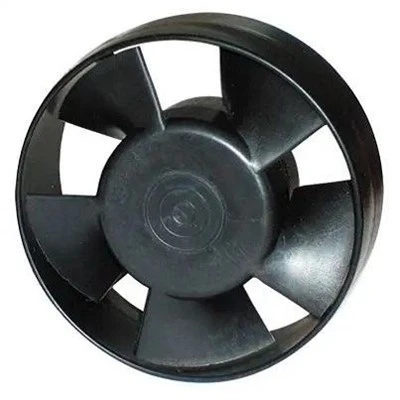
I’ve learned over the years that ventilation solutions aren’t one-size-fits-all. A single axial fan works perfectly for small, low-pressure spaces, while parallel fans shine for large, flexible systems. The worst decisions come from choosing the wrong setup because you didn’t account for your space’s unique needs. Last year, a customer came to me wanting to pair two small axial fans to cool his auto body shop, and he thought it would be cheaper than a single large fan. After measuring his static pressure (1.2 inches, higher than he expected from his spray booth), we ran the numbers: two parallel fans would only deliver 85% of the airflow he needed, while a single large fan was 10% cheaper upfront, used 15% less energy, and fit his space better. He switched, and his cooling has run flawlessly ever since.
Electronics Cooling Fan If you’re still unsure whether parallel operation is right for your axial fan setup, or you want to calculate how much airflow you’ll actually get, don’t hesitate to reach out to discuss your needs. I’ve worked with warehouses, manufacturing plants, greenhouses, and loading docks, and I can help you avoid the common pitfalls that come with parallel fan operation. Just tell me about your space size, ductwork, and ventilation goals, and I’ll walk you through what will work best.
References
- ASHRAE Handbook: HVAC Applications, Chapter 21 “Industrial Ventilation”
- EASA (Electrical Apparatus Service Association) Technical Bulletin TB-32: “Axial Fan Parallel Operation and System Stability”
- AMCA Standard 99-2020: “Fans – Testing for Performance”
- Fan and Motor Association (FMA) Guide to Commercial Ventilation Fan Selection and Application
Dongguan Shengzhirong Electronics Co., Ltd.
As one of the most professional axial fan manufacturers and suppliers in China, our products have good reputation in the market. Please rest assured to wholesale high quality axial fan made in China here from our factory. Customized orders are welcome.
Address: 6/F, Building 2, No.68, Shunxing 2nd Road, Dajingtou 2nd Industrial Zone, Dalang Town, Dongguan City, Guangdong, China
E-mail: szr_coolingfan@163.com
WebSite: https://www.szrfan.com/
