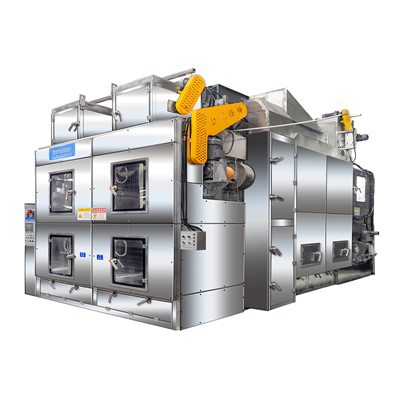
Adjusting the flapping frequency of a Textile Flapping Machine is a crucial aspect that directly impacts the quality and efficiency of textile production. As a seasoned Textile Flapping Machine supplier with years of industry experience, I understand the significance of this adjustment and am eager to share some in – depth knowledge on how to achieve it effectively. Textile Flapping Machine
Understanding the Importance of Flapping Frequency
The flapping frequency of a Textile Flapping Machine refers to the number of flapping motions the machine makes within a specific time frame, usually measured in beats per minute (BPM). This frequency plays a vital role in determining the final characteristics of the textile product.
A higher flapping frequency can lead to more intense agitation of the textile material. This is beneficial when dealing with thick or tightly woven fabrics. The increased agitation helps in better penetration of dyes, chemicals, or finishing agents, resulting in more uniform coloration and improved surface treatment. For example, in the production of denim, a relatively high flapping frequency can enhance the fading effect during the washing process, giving the denim a more authentic and fashionable look.
On the other hand, a lower flapping frequency is suitable for delicate fabrics. Fabrics such as silk or lace are prone to damage under excessive mechanical stress. By setting a lower flapping frequency, we can ensure that these fabrics are treated gently while still achieving the necessary processing effects, like removing impurities or applying a light finish.
Factors Affecting Flapping Frequency
- Fabric Type and Characteristics
Different fabrics have different physical and chemical properties, which require corresponding flapping frequencies. As mentioned earlier, the thickness, density, and fiber composition of the fabric are key factors. For instance, cotton fabrics are generally more durable and can withstand a wider range of flapping frequencies compared to synthetic micro – fiber fabrics. Micro – fiber fabrics are often very fine and can be easily entangled or damaged at high frequencies. - Processing Requirements
The specific processing steps also influence the flapping frequency. If the textile is going through a dyeing process, a certain frequency may be needed to ensure proper dye dispersion and absorption. In the case of a fabric softening treatment, a different frequency might be more appropriate to evenly distribute the softening agent across the fabric surface. - Machine Design and Specifications
Each Textile Flapping Machine has its own design limitations and capabilities. The power of the motor, the structure of the flapping mechanism, and the overall stability of the machine all determine the available range of flapping frequencies. Some high – end machines may offer a wider and more precise frequency adjustment range, allowing for more customized processing.
Methods for Adjusting Flapping Frequency
- Mechanical Adjustment
In some traditional Textile Flapping Machines, mechanical adjustment methods are used. This typically involves changing the position of pulleys, gears, or belts. For example, by replacing a smaller pulley with a larger one on the drive shaft, the rotational speed of the flapping mechanism can be reduced, thereby lowering the flapping frequency. However, this method requires a certain level of mechanical expertise and may involve some downtime for the machine during the adjustment process. - Electrical Control
Modern Textile Flapping Machines are often equipped with advanced electrical control systems. These systems use variable frequency drives (VFDs) to adjust the motor speed, which in turn controls the flapping frequency. VFDs offer a high degree of precision and flexibility. Operators can simply input the desired frequency value on a control panel, and the VFD will automatically adjust the motor’s electrical parameters to achieve the set frequency. This method is not only more convenient but also allows for quick and easy changes during the production process. - Programmable Logic Controller (PLC) Programming
For more complex and automated production lines, PLC programming can be used to control the flapping frequency. PLCs can be programmed to change the frequency according to a pre – set sequence or in response to certain input signals, such as the type of fabric detected by sensors or the progress of the processing cycle. This provides a high level of automation and optimization for textile production.
Step – by – Step Guide to Adjusting Flapping Frequency
- Understand the Machine Manual
Before attempting any adjustment, it is essential to thoroughly read and understand the machine’s operating manual. The manual will provide detailed information about the machine’s design, the available adjustment methods, and any safety precautions. It will also specify the recommended frequency ranges for different types of fabrics and processing requirements. - Determine the Required Frequency
Based on the fabric type and the specific processing needs, determine the appropriate flapping frequency. You can refer to industry – standard guidelines, past production experience, or conduct small – scale trials to find the optimal frequency. - Select the Adjustment Method
Depending on the machine’s features, choose the most suitable adjustment method. If it is a mechanical adjustment, gather the necessary tools and follow the instructions in the manual to make the changes. For electrical control or PLC programming, make sure you are familiar with the control panel operation or have basic programming knowledge. - Monitor and Test
After making the adjustment, start the machine and run a small batch of the textile product. Monitor the processing effect carefully, including factors such as fabric quality, color uniformity, and any signs of damage. If the results are not satisfactory, make further adjustments until the desired outcome is achieved.
Tips for Optimal Flapping Frequency Adjustment
- Regular Maintenance
Keep the machine in good working condition through regular maintenance. This includes cleaning the flapping mechanism, lubricating moving parts, and checking the electrical connections. A well – maintained machine will provide more stable and accurate frequency adjustment. - Training for Operators
Provide comprehensive training for machine operators. They should be familiar with the machine’s functions, adjustment methods, and safety procedures. Well – trained operators can make more informed decisions and adjustments during the production process. - Data Collection and Analysis
Keep records of the flapping frequency settings, fabric types, and processing results. Analyze this data over time to identify trends and optimize the frequency adjustment for different production scenarios. This data – driven approach can lead to more consistent and high – quality textile production.
Conclusion

Adjusting the flapping frequency of a Textile Flapping Machine is a multi – faceted process that requires a good understanding of fabric properties, machine capabilities, and processing requirements. By following the methods and tips outlined above, textile manufacturers can achieve optimal flapping frequencies, resulting in improved product quality, increased production efficiency, and reduced costs.
Inspection Machine If you are in the textile industry and looking for a reliable Textile Flapping Machine or need more in – depth advice on frequency adjustment, we are here to help. Our team of experts has extensive experience in providing customized solutions for various textile processing needs. Contact us for more information and let’s start a productive conversation about your textile production requirements.
References
- Textile Machinery Handbook: A comprehensive guide to the design, operation, and maintenance of textile machinery.
- Journal of Textile Science and Technology: Contains research articles on various aspects of textile processing, including the impact of flapping frequency on fabric quality.
- Industry – specific training materials provided by leading textile machinery manufacturers.
Jiangsu Feng Te Technology Co., Ltd.
We’re well-known as one of the leading textile flapping machine manufacturers in China. With a professional production team, we are able to meet the needs of the majority of our customers. Please rest assured to buy discount textile flapping machine for sale here from our factory.
Address: No. 4 Zhanghong Road, Siying Industrial Park, Lianyungang City, Jiangsu Province, China
E-mail: frentejenny@foxmail.com
WebSite: https://www.jsfrente.net/
